Sustainability has become a defining part of how brands communicate their values and how consumers decide what to buy.
Labels today go beyond ingredient lists by communicating responsibility, transparency, and progress, giving shoppers insight into both what a product contains and how it was made.
Transparency Over Buzzwords
Modern sustainable labels focus on specific, verifiable information rather than broad marketing language.
Consumers want to know where ingredients come from, how products are made, and what steps brands take to reduce environmental impact. Clear statements about sourcing, farming methods, water usage, or packaging materials allow shoppers to evaluate claims without guessing what they mean.
Many brands also include QR codes or short links that lead to more detailed explanations beyond what fits on the label.
Certifications as Proof Points
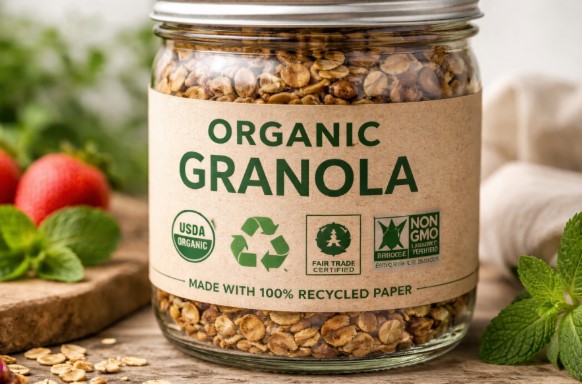
Third-party certifications remain one of the most visible indicators of sustainability.
Logos for organic, fair trade, non-GMO, or carbon-conscious practices help consumers quickly identify products that meet recognized standards. These marks provide credibility because they are based on independent verification rather than self-reported claims.
While certification alone does not tell the full story, it serves as a trusted starting point for building credibility around a brand’s sustainability efforts.
Social Impact Joins Environmental Impact
Sustainability now extends beyond environmental considerations to include people and communities.
Many labels highlight commitments to fair labor practices, partnerships with local growers, or support for community programs. This broader view reflects how consumers define responsibility today, linking environmental care with ethical business practices.
Labels that acknowledge both dimensions communicate that sustainability is part of the company’s overall operating philosophy.
Digital Layers of Information
Physical labels are increasingly paired with digital content.
QR codes and web links give consumers access to sourcing maps, sustainability reports, and detailed explanations of materials and processes. This approach allows brands to keep on-package messaging concise while offering transparency for those who want to explore further.
The label becomes an entry point rather than the full story.
A Shift in Consumer Expectations
Younger and more values-driven shoppers are shaping how sustainability appears on packaging.
They expect clarity, data, and consistency rather than slogans. As a result, labels today reflect long-term commitments instead of one-time campaigns. Sustainability is presented as an integrated part of brand identity rather than a separate feature.
Sustainable food and beverage labels today emphasize clear claims, trusted certifications, social responsibility, and access to deeper information. Together, these elements help consumers make informed choices while giving brands a way to communicate meaningful action in a competitive marketplace.
About M&R Label
Since 1989, M&R Label has specialized in high-quality, custom label printing across diverse industries. With a customer-first philosophy and a commitment to fast turnaround, we combine advanced technology, skilled experts, and a dedication to service. Located in University Park, Illinois, our state-of-the-art facility enables efficient, reliable label production, treating each client as a valued partner. From short-run projects to large orders, M&R Label strives to deliver excellence with every order.
If you’re interested in learning more about our label services and would like us to provide you with a FREE quote, trust the experts at M&R Label to help you!
Call Us at (708) 534-6621 or Request a Quote!