When people discovered the few perils of paper stickers, the next advancement was vinyl ones.
They are fun, and they stay new for the longest time. Vinyl stickers are a fun and a practical way to customize everyday items, from water bottles and phone cases to storage bins and décor pieces. These stickers are durable and that makes it special.
However, plastic surfaces can be a tricky place for these stickers because they can peel, fade, or lose adhesion over time. This is because plastic often resists adhesives, especially if it is smooth or exposed to moisture and frequent handling.
To make sure your vinyl stickers last, sealing them properly is the best solution.
We will discuss why sealing is important, the different methods you can use, and step-by-step instructions to protect your stickers and keep them looking sharp.
Why Seal Vinyl Stickers on Plastic?
Vinyl stickers last longer so they are the best option for plastic surfaces. Moreover, the colors remain intact after long periods, but plastic is a tricky surface for adhesion. To keep the sticker on the surface, you must use sealing. Here are some reasons why sealing is a must:
- Protects from wear and tear: What kind of plastic surfaces do manufacturers need vinyl stickers for? Utensils? Machinery covers? Or maybe everyday tools such as door handles, etc. All these surfaces can experience frequent handling, scratches, and bumps, which can damage the edges of the sticker.
- Prevents peeling: Plastic is a smooth surface, and the kind of object that is in use may go through peeling. It is essential for adhesives to be sealed on plastic so that the corners do not lift or slide off.
- Guards against moisture: Water bottles, lunch boxes, and bathroom items are often exposed to condensation or splashes, which can make the adhesive weak.
- Preserves color and design: Sunlight and cleaning products can fade vinyl stickers. A protective seal adds UV and chemical resistance. By sealing your stickers, you extend their lifespan and maintain a polished appearance.
Preparing the Plastic Surface
Before applying the vinyl sticker, you have to prepare the plastic surface well so that the stickers remains intact.
Clean the surface well and ensure it is dry because if the surface is not clean or smooth, even the best sealant may fail. Use a mild soap and cloth to wash and then dry the plastic surface. Remove any dust, grease, or residues.
The next step is to use isopropyl alcohol and a lint-free cloth to remove any oils or soap traces. This ensures the adhesive sticks better. Feel the surface to see if it has any curves or bumps. You can lightly sand it with fine-grit sandpaper to create a flat base for the sticker. Make sure there are no bubbles or lifted edges.
A squeegee or credit card can help smooth it down. Do not ignore this step of smoothing the surface because it is crucial in the longevity of the adhesion.
The Different types of Sealing Methods
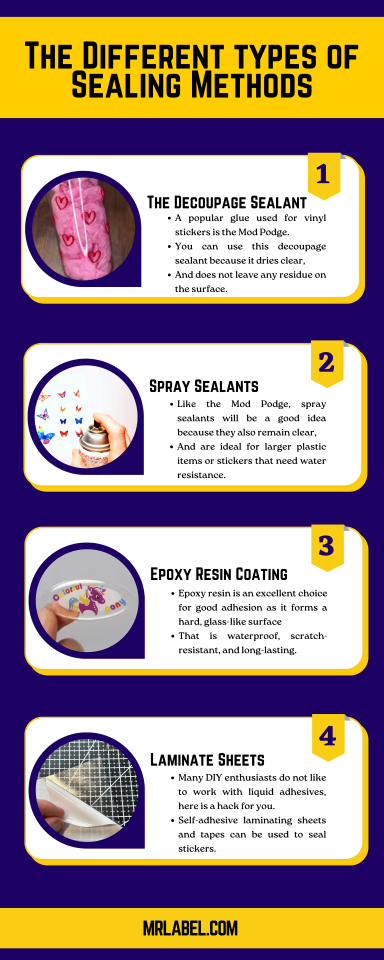 There are numerous sealing methods but some are more popular and we have jotted them down in one place for you.
- The Decoupage Sealant: A popular glue used for vinyl stickers is the Mod Podge. You can use this decoupage sealant because it dries clear, and does not leave any residue on the surface.
- Spray Sealants: Like the Mod Podge, spray sealants will be a good idea because they also remain clear, and are ideal for larger plastic items or stickers that need water resistance.
- Epoxy Resin Coating: Epoxy resin is an excellent choice for good adhesion as it forms a hard, glass-like surface that is waterproof, scratch-resistant, and long-lasting.
- Laminate Sheets or Tapes: Many DIY enthusiasts do not like to work with liquid adhesives, and if you are one of them, here is a hack for you. Self-adhesive laminating sheets and tapes can be used to seal stickers. They work by adding a clear protective layer on top.
Final Thoughts
Sealing vinyl stickers on plastic may take a little extra effort, but it is worth it for the durability, protection, and polished appearance it provides.
Whether you want a quick and simple solution with laminating sheets, a decorative seal using Mod Podge, or heavy-duty protection with epoxy resin, the right method depends on your item and how it will be used.
With careful preparation, the right materials, and a little patience, you can ensure your vinyl stickers remain bright, secure, and stylish for a long time.