Cold changes everything.
Materials behave differently, adhesives stiffen, inks react, and surfaces shrink and expand. Labels that look perfectly fine at room temperature can start to fail fast once temperatures drop.
That is why cold-temperature labeling is its own category. It is not a variation of standard labeling, but rather, a performance requirement.
If your customers store, ship, or use products in cold environments, the label is part of the product’s functionality. It has to stay readable, attached, and compliant no matter what the thermometer says.
Where Cold-Temperature Labels Are Used
Cold exposure is not limited to freezers.
Many products spend part of their lifecycle in cold or fluctuating environments, including:
- Refrigerators and freezers
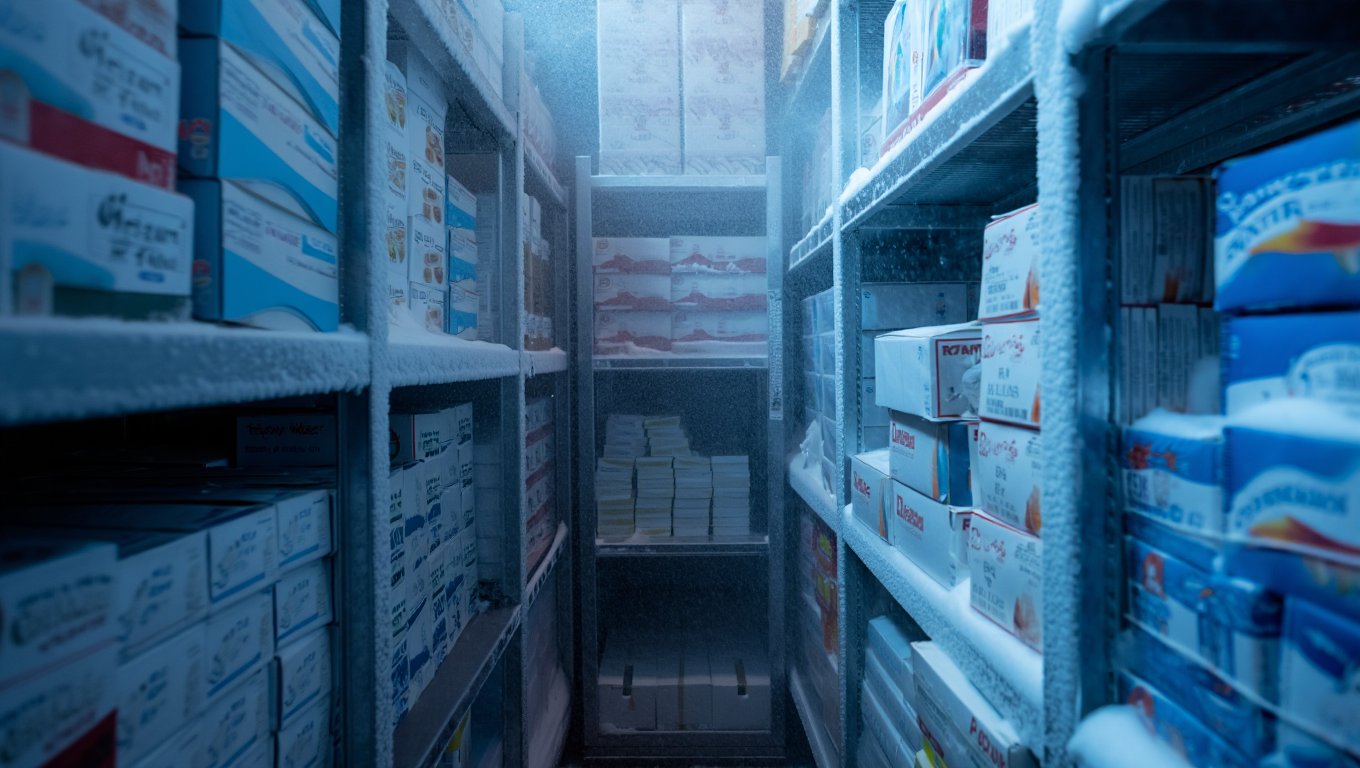
- Cold storage warehouses
- Refrigerated shipping and logistics
- Outdoor equipment and machinery
- Vehicles and trailers
- Refrigerant pipes and industrial systems
- Outdoor signage and warning labels
In each of these environments, label failure creates real problems, information becomes unreadable, barcodes stop scanning, and compliance markings disappear. On top of that, products get delayed, rejected, or flagged.
Why Standard Labels Break Down in the Cold
Most standard pressure-sensitive labels are designed for room-temperature application and storage. Once cold enters the picture, performance shifts.
Common issues include:
- Adhesives losing tack and releasing from the surface
- Inks cracking, fading, or becoming brittle
- Films shrinking or wrinkling
- Labels lifting at corners and edges
- Barcodes losing scan reliability
These failures are not cosmetic. They disrupt traceability, compliance documentation, safety communication, and inventory flow.
What Makes a Cold-Temperature Label Different
Cold-rated labels are engineered to perform where standard constructions cannot.
Performance comes from the right combination of materials working together:
Substrates that remain stable and flexible in low temperatures
Adhesives formulated to bond on cold surfaces and stay attached through temperature shifts
Inks designed to maintain readability and scannability without cracking or fading
This construction allows labels to be applied in cold rooms, stay attached in freezers, and remain readable through shipping, storage, and handling.
The result is labeling that supports operations instead of becoming a weak point in the process.
Why Cold-Temperature Labels Protect Compliance and Traceability
Cold-storage industries live under tight regulatory and quality standards. Product identification, safety instructions, lot codes, and barcodes all depend on label integrity.
When labels fail it affects:
- Inventory accuracy
- Product traceability
- Inspection readiness
- Safety communication
- Customer confidence
Reliable cold-temperature labels protect these systems by keeping information intact throughout the product lifecycle.
Matching the Label to the Environment
There is no single “cold label” that works for every application.
Performance depends on a number of factors, including: surface material; application temperature; storage temperature; moisture exposure; handling conditions; and regulatory requirements.
The right construction starts with understanding where the label will live, how it will be applied, and what it must communicate long after application.
This is where experienced label design makes the difference between a label that survives and one that becomes a problem.
Built for the Cold
Labels that perform well in extreme cold protect compliance, keep workflows moving, and prevent costly interruptions. They become part of the system, not a weak point inside it.
M&R Label designs cold-temperature label solutions that stay readable, stay attached, and stay reliable wherever cold conditions exist.
If your products spend time in cold storage, refrigerated transport, or outdoor winter environments, it may be time to look at whether your labels are truly built for the cold.