
Why Changing a Container Should Trigger a Label Review
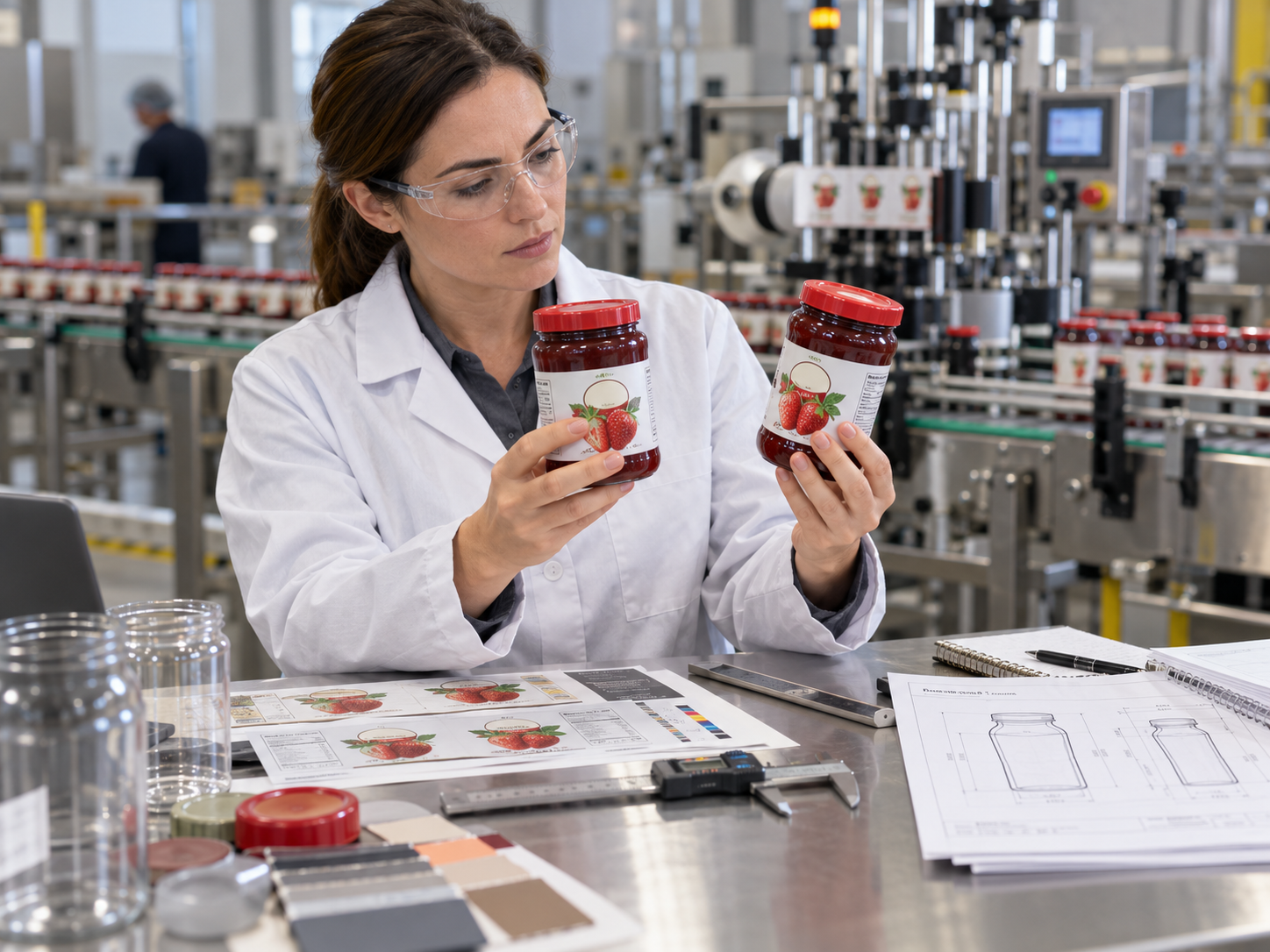
Changing a bottle, jar, pouch, or packaging supplier might seem like a straightforward operational decision.
The product remains the same, so it is easy to assume the existing label will work without modification.
That assumption creates risk.
A different container affects more than appearance. Changes in dimensions, shape, surface material, or application conditions often influence label size, adhesive performance, artwork placement, and how the label moves through production.
Any container change deserves a corresponding label review before the new package reaches the line.
Dimensions Affect More Than Label Size
Even small changes in a container’s height, width, circumference, or taper affect how a label fits.
Artwork designed for one bottle might wrap differently around another. A label placed on a tapered jar could wrinkle or lift if the dimensions no longer match the surface. Moving to a smaller package also reduces the available space for branding, nutrition information, ingredients, barcodes, and required statements.
Before ordering labels for a new container, confirm the usable labeling area and review the artwork against the actual package rather than relying on the previous specifications.
Surface Changes Affect Materials and Adhesives
Switching container suppliers sometimes means switching materials without realizing it.
One plastic surface might have different adhesion characteristics from another. Moving from glass to plastic, rigid packaging to a flexible pouch, or a smooth surface to a textured one changes what the label needs to adhere properly.
The existing label material and adhesive should be evaluated against the new surface along with the product’s environment. Refrigeration, condensation, moisture, oils, and temperature changes also influence performance.
A label that worked well on the previous package does not automatically deliver the same result on its replacement.
Packaging Equipment Needs Another Look
Container changes also affect application.
A taller bottle, narrower jar, or differently shaped package might travel through labeling equipment differently. Placement guides, sensors, applicator settings, or label orientation could require adjustments.
Brands using automated equipment should test the new container and label together before a full production run. This provides an opportunity to identify application problems while adjustments are still manageable.
Artwork Should Follow the Package
A package change also deserves an artwork review.
Different proportions affect how branding and required information appear on the finished product. Text that looked balanced on one container could feel crowded on another, while barcodes or regulatory information might move into curved or difficult-to-read areas.
The safest approach is to treat the container and label as one packaging system.
M&R Label works with brands to evaluate size, materials, adhesives, artwork, and production requirements before a revised package enters production. Reviewing the label whenever the container changes helps make sure both pieces still work together when the finished product reaches the packaging line.
About M&R Label
Since 1989, M&R Label has specialized in high-quality, custom label printing across diverse industries. With a customer-first philosophy and a commitment to fast turnaround, we combine advanced technology, skilled experts, and a dedication to service. Located in Franklin Park, Illinois, our state-of-the-art facility enables efficient, reliable label production, treating each client as a valued partner. From short-run projects to large orders, M&R Label strives to deliver excellence with every order.
If you’re interested in learning more about our label services and would like us to provide you with a FREE quote, trust the experts at M&R Label to help you!
Call Us at (708) 534-6621 or Request a Quote!
Ready to Start Your Label Project?
Our team of experts is ready to help bring your vision to life.
Request a Quote