
Your Guide to Glowing Skincare Labels
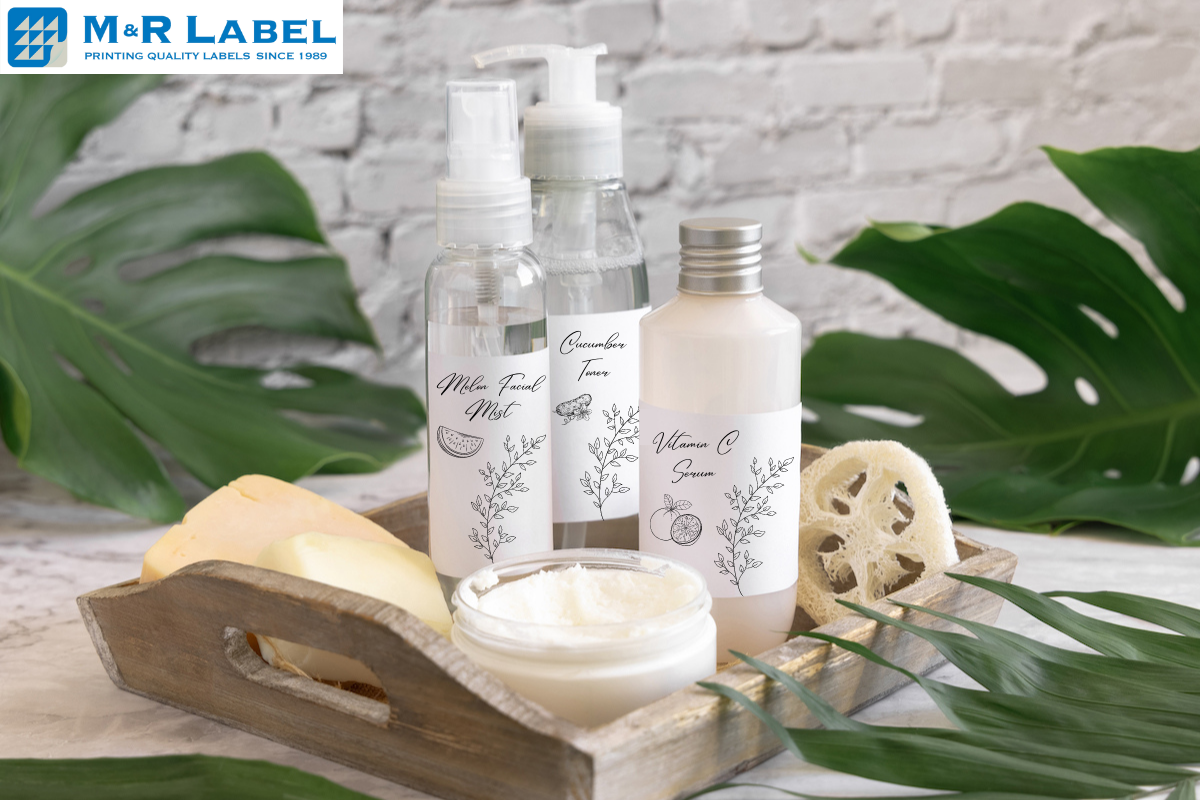
Unless you’ve spent the last decade under a collagen eye mask, it’s easy to see that a global skincare revolution has been taking place! On YouTube and Instagram, you’ll find thousands of influencers promoting the latest skincare brands and boasting their own patented skincare routines.
The modern skincare market space is dominated by brands that have positioned themselves as lifestyle and wellness companies. Gwyneth Paltrow’s Goop and Alicia Keys’ Soulcare are perfect examples of skincare products that leverage eye-catching label design and some celebrity clout to stand out in the marketplace.
Chances are, you don’t have a famous movie star cousin eager to be the face of your skincare product (if you do, we love that for you). That means creating a high quality custom label for your skincare product is even more important to make sure your skincare products stand out from the pack. Use this blog as your guide to glowing skincare labels! We will discuss skincare label statistics, FDA regulations, creative label design tips and more…
Sizzling Skincare Stats
Before we dive into all of the juicy labeling tips, let’s take a brief look at a few market trends for the skincare industry…
- Women in the US spend roughly $313 per month on beauty products.
- Americans spend $197.01 on beauty products on average each month.
- The US cosmetic market is worth a staggering $62.46 billion.
- The global beauty industry market is valued at $511 billion in 2021.
- Of all the beauty products sold in 2019 skincare made up a whopping 40% of the sales.
- About 82% of US men aged 18-44 use facial skincare products.
- Approximately 58% of US women prefer organic and natural skincare products.
It’s clear to see that, moving forward, skincare is a rapidly growing industry. That’s great news for your business! It also means that competition will be fierce and unrelenting. We will equip you with the tools to stand out, but that doesn’t mean you can neglect the basic requirements for skincare labels. Let’s go over the fundamentals…
Meeting Industry Standards
Skincare labels are regulated by the FDA, so it’s important to feature specific information on your product to avoid recalls or legal action. There are two main locations on a skincare label: the principal display panel and the information panel.
The principal display panel must contain the following:
- Net Quantity of the Product – In terms of weight, numerical count, or fluid ounces, how much of your product will the customer receive if they purchase your product?
- Statement of Identity – This is the illustrated name of your product. Make sure the statement of identity is something consumers will be able to read and easily understand what your product is and how it can benefit them.
The information panel must contain the following:
- Ingredients – The ingredients used to make your skincare product should be listed in order of their dominance in the product.
- Warning and Caution Statements – Prominent and conspicuous statements related to specific products that may be hazardous to consumers. These often include instructions on what to do if someone accidentally ingests the product or gets it in their eyes.
- The Material facts – This is a detailed and accurate list of all materials included in the product.
- Distributor statement – Your product must include who distributed the product if that particular distributor is different from the manufacturer.
- Business Name and Address – Include the street address, city, state, and ZIP code of the manufacturer, distributor, or packer.
Extreme Makeover: Custom Label Edition
Now that you know the basic regulatory requirements for skincare labels, it’s finally time to get creative with your brand. This is the fun part! Time to get customers excited about the benefits of your skin care product with trendy design cues, bold colors, and expert labeling through M&R Label!
Modern Labeling Trends
Highlight your differentiators: Your differentiators separate you from the pack. As we discussed, the modern skincare product consumer is more savvy than ever before. They care about the sustainability and wellness of their brand and most are willing to pay a premium for products that align with their values. Use buzzwords like “healthy” and “natural” to entice your potential customers. Here are few examples of differentiators you should include on your custom label, if applicable:
- Cruelty-free/Not tested on animals
- Hypoallergenic
- Alcohol-free
- Vegan
- Organic
Giving Your Custom Labels Thick Skin with M&R Label
Whether you sell pumps, sprayers, jars, droppers or compacts, there is no one-size-fits-all solution for your custom skincare labels. However, if you want your labels to be durable, there are a few physical characteristics that you should consider when designing your custom labels.
- Discoloration resistant: If your skincare product has acid in it, such as AHA, you’ll want a product label that won’t become discolored if a drip or smear comes into contact with the label. Some materials used to create product labels are impervious to degradation if exposed to these types of products.
- Oil Resistance and moisture resistance: Most skincare products are used in the shower or by the sink. Waterproof and oil-resistant labels don’t peel off the container if it gets wet or dirty.
- Eco-friendly considerations: Choose eco-friendly packaging and labeling options. At M&R Label, we use Flexographic label printing in order to ensure sustainability and eco-friendly practices.
- Light shielding: Many skincare products are sensitive to light. If this is the case for your brand, light can break down your product faster. Choose a label that keeps your skincare product shielded from sunlight so it can stay fresh for as long as possible.
- Showcase sustainability: Sustainability goes hand-in-hand with transparency. Customers want to know that the product they are using comes in recyclable packaging and is safe for the environment. Not only does becoming eco-friendly help the environment, it has also been proven to help drive sales and brand recognition! In fact, a survey published in 2020 reported that the majority of American Generation Z consumers – those born between 1995 and 2012 – would pay a premium of 10% or more for sustainable products.
As a seller of skincare products, your customers are trusting your brand with a lot of responsibility. That’s why it’s important to inform customers about how to use your product effectively, and explain exactly what ingredients your product uses. Everyone’s skin is unique and so should your product. Embrace minimalistic graphics to promote clarity and transparency. Choose durable labels that can withstand conditions like steamy showers.
Most importantly, partner with a professional custom labeling team that has the tools and expertise to design the best premium label for your brand. With over 30 years of skincare industry experience, M&R Label can help make the label design and label inventory process silky smooth.
Ready to Start Your Label Project?
Our team of experts is ready to help bring your vision to life.
Request a Quote